
Artificial Intelligence in the physical sciences: leveraging AI for scientific discovery
Artificial Intelligence in the physical sciences: leveraging AI for scientific discovery
Artificial intelligence is reshaping how scientific discovery happens, from automated laboratories and data-driven experiments to large-scale climate and atmospheric modelling.
As scientific datasets grow ever larger and more complex, researchers are increasingly using AI and machine learning techniques to identify patterns, accelerate simulations, analyse vast quantities of experimental and observational data, and generate new scientific hypotheses. Across the physical sciences, these approaches are transforming how scientists process information and uncover new insights.
As AI tools become more powerful, scientists must navigate new questions: when does a model reveal genuine insight, and when is it simply identifying patterns? How do we validate results, interpret uncertainty, and retain human judgement in increasingly automated workflows?
Chaired by Professor James Fergusson, Department of Applied Mathematics and Theoretical Physics, this event will explore how AI, machine learning, and data-driven approaches are being used in practice across the physical sciences, and what that means for scientific understanding. You will hear from:
- Professor Alex Archibald (Yusuf Hamied Department of Chemistry)
- Dr Matt Osman (Department of Geography)
- Professor Shijing Sun (Department of Materials Science and Metallurgy)
Through examples spanning materials science, atmospheric chemistry, climate modelling, and large-scale environmental data analysis, this session offers a behind-the-scenes look at how AI is transforming not just the speed of discovery, but the nature of scientific knowledge itself.
Programme
6pm – Drinks reception and networking
Join us for drinks and canapés, with the opportunity to meet and speak with students and researchers from the physical sciences working at the forefront of AI-driven research.
6:45pm – Talks
We will move into the auditorium for a series of short, accessible talks from our speakers, exploring how AI is shaping scientific discovery across the physical sciences.
7:30pm – Audience Q&A
Following the talks, there will be an opportunity to ask questions and join the discussion.
8pm - Talks end
You are welcome to continue the conversation with speakers over drinks after the talks.
Reading material
In advance of the event, we invite you to explore a selection of papers provided by our speakers, offering insights into their research:
A foundation model for the Earth system
Atmospheric composition and climate impacts of a future hydrogen economy
The role of future anthropogenic methane emissions in air quality and climate
Past climates inform our future
Globally resolved surface temperatures since the Last Glacial Maximum
Speakers
Professor James Fergusson (Churchill 2004)

Professor James Fergusson is a theoretical cosmologist and award-winning university lecturer at the Department of Applied Mathematics and Theoretical Physics. He is the Executive Director of the Data Intensive Science programmes at the University of Cambridge, and Director of the Infosys Cambridge Enterprise AI Centre.
His research group operates at the interface of physics and artificial intelligence, focusing on areas where AI has the potential to fundamentally transform the way science is conducted. Key research themes include AI for simulations, using physics to deepen our understanding of AI, employing AI to explore equations, advancing AI interpretability and error quantification, and developing agentic automation for scientific discovery.
James frequently delivers talks and workshops on the application of AI in science and business, delivers lectures on the impact of AI via the Judge business school, and his work has been featured in the Financial Times.
Professor Alexander Archibald
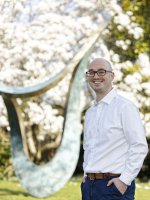
Professor Alexander Archibald is Professor of Atmospheric Chemistry at the University of Cambridge, where he leads the Atmospheric Chemistry Modelling group, and is head of the National Centre for Atmospheric Science at Cambridge University. His work leverages a hierarchy of models to understand the interactions between atmospheric composition (the gases and aerosols in the atmosphere) and the climate system. This work increasingly spans space and time with current research questions focused around the use of Earth based models to understand the atmospheric chemistry on distant exoplanets and help answer the outstanding question of whether or not we are alone in the Universe. A recent focus of his research is developing and applying AI based models to speed up climate models and specific processes within them. He seeks to leverage these models and the growing wealth of observational data to reduce spread in future estimates and better characterise the risks of future extreme conditions for air quality and climate related change.
Dr Matthew Osman
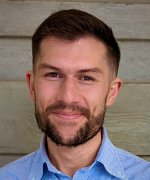
Dr Matthew Osman is an Assistant Professor of Climate Science at the University of Cambridge, where he leads the Cambridge Computational Climatology and Paleoceanography (C3PO) research group. His work combines climate models with historical and geological records of the past --- including sediments, ice cores, and other environmental archives --- to understand how Earth’s climate system responds to major changes in temperature, greenhouse gases, and ice sheets. A key focus of his research is developing statistical frameworks that allow climate models to “learn” from past climates. By combining the “big data” of Earth’s geologic past with model simulations, he aims to reduce uncertainties in projections of future climate change.
Professor Shijing Sun
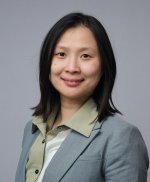
Dr Shijing Sun is an Associate Professor at the Department of Materials Science & Metallurgy, University of Cambridge, leading the Autonomous Materials Group. She read Natural Sciences at Trinity College, Cambridge, and completed her PhD under Prof. Anthony Cheetham before postdoctoral research at MIT with Prof. Tonio Buonassisi. She later became a Research Scientist at MIT, leading high-throughput synthesis and characterisation for perovskite photovoltaics and optoelectronics. Before returning to academia, she worked at the Toyota Research Institute as a Senior Research Scientist, focusing on the application of AI to battery and fuel cell research. She was also an Associate Editor for APL Machine Learning from 2023 - 2025.
Booking information
This event has sold out.
Please drop us an email at departments@alumni.cam.ac.uk to get a place on the waitlist.
Location
Contact
Getting here
30 Euston Square is located on the corner of Euston Road and Melton Street, directly opposite the Wellcome Collection building.
Tube – Euston Station via Northern, Victoria, and Overground lines, or Euston Square via Circle, Metropolitan, and Hammersmith and City lines
Bus – 18, 27, 30, 59, 68, 73, 91, 168, 205, 253, 390, 476
Train – Euston Station is a 1-minute walk, King’s Cross St Pancras is a 7-10 minute walk
Car – The nearest car park is George Mews Carpark on North Gower Street, NW1 2EU.
Share this page


