
This is a past event which took place on 21 October, however, you can read more about it below. Thank you to everyone who joined Martin Rees, Lord Rees of Ludlow OM FRS for his fascinating talk. Invitations for future events in the series will be sent out in 2021. In the meantime, you can contact us on hongkongseries@admin.cam.ac.uk with any questions about the series. We hope that you can join us for the next event.
Wednesday, 21 October 2020 — previous event
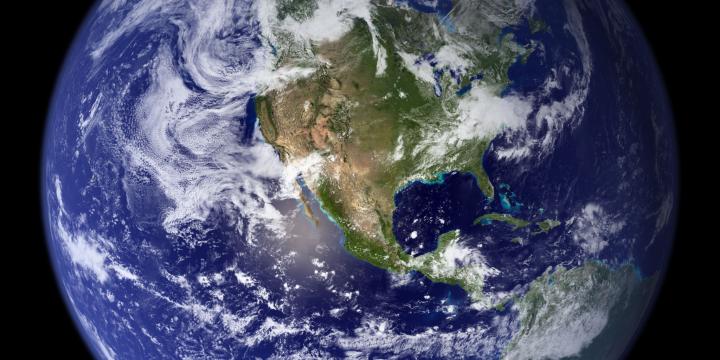
As the pace of change accelerates, there are three things we can predict about Earth in the mid-century: it will be more crowded (with a population of around 9 billion); it will be warmer (perhaps heading towards a threatening climatic ‘tipping point’), and the economic advance of East Asia may have ended 400 years of North Atlantic hegemony. But we cannot predict the speed of technological progress — in biotech, cybertech AI and in space. These technologies could offer huge benefits, but may, perhaps, advance too fast for us. We are ever more interconnected, and in many ways more vulnerable to global disaster, as we are seeing with the current pandemic.
Join our hosts Tzo Tze Ang and Eashwar Krishnan in welcoming one of the world’s greatest living scientists and eminent Cambridge academic: the UK Astronomer Royal, Martin Rees, Lord Rees of Ludlow OM FRS, for an exclusive opportunity to discuss society's known and potential challenges alongside reasons to be hopeful as we hurtle towards 2050. Following the presentation, Eashwar Krishnan will facilitate a live Q&A with Lord Rees.
Speaker

An astrophysicist and cosmologist, and the UK’s Astronomer Royal
He is based at the University of Cambridge where he has been Professor of Astronomy and Director of the Institute of Astronomy. Martin is a Fellow, and was the former Master, of Trinity College, Cambridge. After studying at the University of Cambridge in the 1960s, he held post-doctoral positions in the UK and the USA, before becoming a professor at the University of Sussex. In 1973, Martin became a fellow of King’s College and Plumian Professor of Astronomy and Experimental Philosophy at Cambridge (continuing in the latter post until 1991) and served for ten years as Director of Cambridge’s Institute of Astronomy. From 1992 to 2003 he was a Royal Society Research Professor, and then from 2004 to 2012, Master of Trinity College. In 2005, Martin was appointed to the House of Lords, and he was President of the Royal Society from 2005 to 2010. Martin’s main astronomical research interests have been galaxy formation, cosmic jets, black holes, gamma ray bursts, along with more speculative aspects of cosmology – in particular, whether we live in a multiverse – and the prospects of detecting extraterrestrial life. He has been increasingly concerned in recent years about long-term global issues – the pressures that a growing and more demanding population are placing on environment, sustainability and biodiversity; and the impact of powerful new technologies. He is co-founder of the Centre for the Study of Existential Risk (CSER) at the University of Cambridge with a focus on these issues.