
CAM's summary of what's been happening across the University.
Photography: Department of Engineering
New process to shorten lab-to-clinic development directly benefits patients
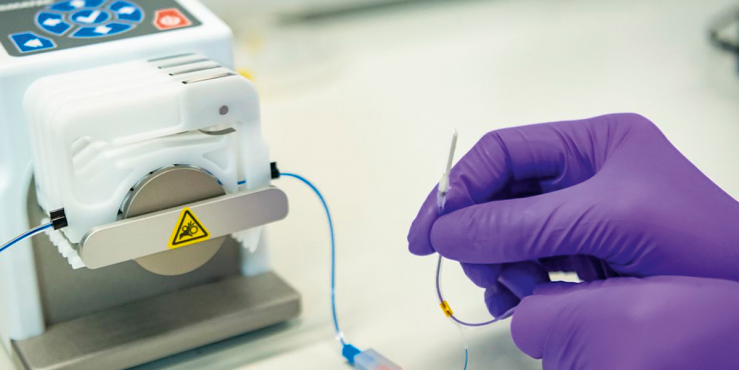
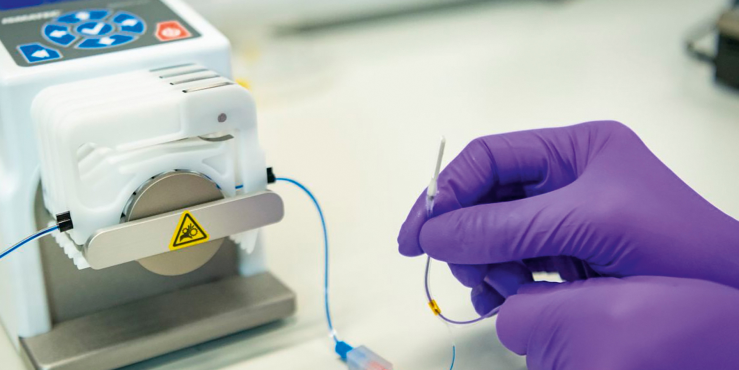
Turning a discovery made in a lab into a regulated device that can be tested with patients is one of the biggest bottlenecks in UK medical research. But now, a new institute will bring together engineers, clinicians and manufacturers to get those innovative devices to patients sooner.
The Institute for Biomedical Innovation (IBI) – which is the only one of its kind in the UK – will transform the University’s Nanoscience Centre on the Cambridge West site into a specialised facility that can take new medical technology from proof of concept towards clinically usable products.
It will fill a crucial gap identified by a series of studies from the Department of Engineering last year, which tracked how early stage medical technologies are developed into real-world clinical devices.
One critical element was missing: the ability to prototype medical equipment properly, with patients and regulation in mind. The IBI aims to change that by offering facilities that will enable medical devices to be developed in ISO-certified environments – a requirement for technologies destined for use with patients.
“If we can shorten the journey from lab to clinic, that can have an enormous impact, and make a real difference to people’s lives,” says Professor George Malliaras from Cambridge’s Department of Engineering, who will serve as Director of the IBI.
The University has committed staff, space and existing equipment to get the IBI started. But further investment is needed, and it is now seeking support from industry, government and philanthropists to realise its full potential.
Read more here.
Lab-grown blood cells enable huge step towards regenerative therapies
Gurdon Institute researchers at the University of Cambridge have found a way to produce lab-grown human blood cells that mimics the process in natural embryos.
The process uses human stem cells to create embryo-like structures that replicate aspects of early human development – including the production of blood stem cells.
These structures – called haematoids – could aid our understanding of early blood formation, simulate blood disorders like leukaemia and produce blood stem cells for transplants.
And the stem cells used to create hematoids can be created from any cell in the body – opening up the possibility of ‘personalised’ blood production.
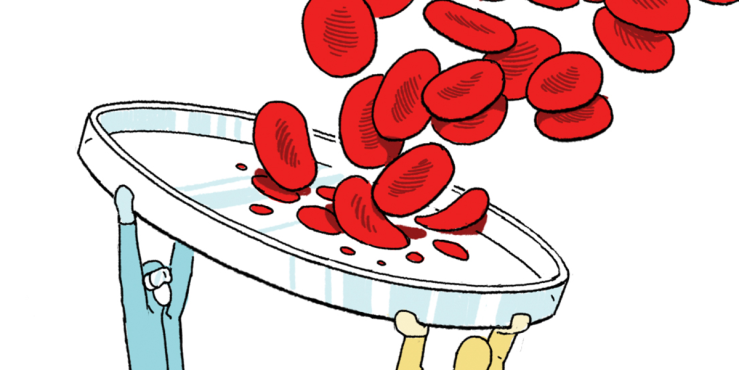
Illustration: Michael Kirkham
Three-minute Tripos
Two-minute Tripos
THE BLACK DEATH IN EUROPE WAS CAUSED BY THE FALLOUT FROM VOLCANIC ERUPTIONS. DISCUSS
Hey, Rattus rattus with the short tail! Why, it’s Rattus rattus with the long tail! Haven’t seen you around the marketplace for a while!
Must say the bowels of this grain ship make a nice change from scrounging scraps in the Sea of Azov’s fleshpots.
All the wheat you can eat! Fleas are a bit annoying, though. Can’t wait till they jump off me and onto a human, ha ha ha.
So where are we headed?
Off to Genoa, I hear. My cousin Rattus rattus with the missing toe went out last year. He’s in waste disposal. Though aren’t we all, ha ha ha. Do you know him?
I’m afraid I don’t.
Lovely chap. Most of the family are there now. Apparently the Great Ash Cloud from the Mountain of Fire has made all the crops fail. Terrible weather it’s been for years now. Very untypical.
My pal Rattus norvegicus with the mange says you can tell what the weather’s been like over past years by looking at the rings in trees. Quite extraordinary.
How very fascinating. Perhaps one day our intelligence as a species will be recognised! Anyway, to avoid famine all the Italian merchants are buying grain from the Mongols of the Golden Horde. And giving us a free ride!
Nothing like great big fields full of the finest grain to turn a horde into a trusted trading partner, eh?
Personally, I’m all for the glories of globalisation! Now we’ve established a touchpoint in Genoa, we can cement links all over the country. It’s a wonderful opportunity to foster a new and mutually advantageous partnership between rats and humans.
That’s the kind of positive attitude we rats need as we prepare for the challenges that await us in 1348. What could possibly go wrong? Ouch! Bloody fleas!
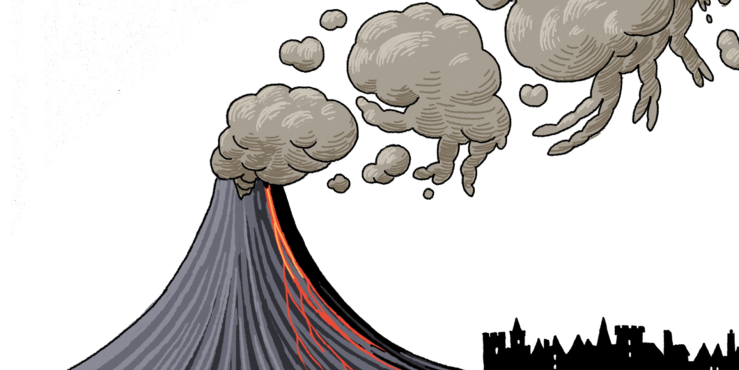
Illustration: Michael Kirkham
Philanthropy
The new Childers Professorship of Irish History, established with a £3.6m gift from the Government of Ireland, marks a renewed commitment to deepening the study of Irish history at Cambridge. The post will provide academic leadership in the field, support graduate students and enhance research on Ireland’s historical and contemporary role in the world. Read more on the story here.