
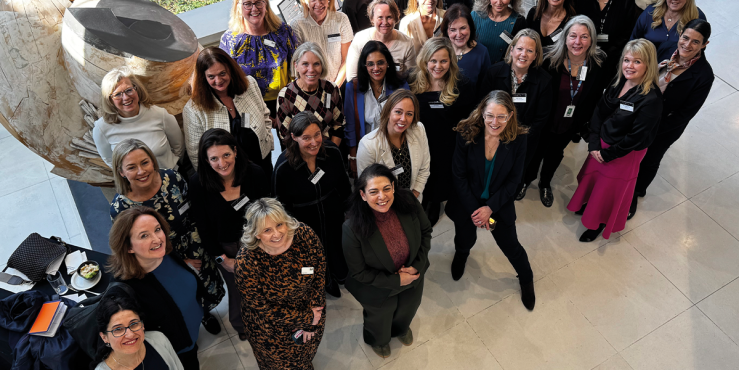
‘We need to disrupt the VC model to invest in the people who are driving our society, and in terms of the future we want to live in’
Hanadi Jabado (Sidney Sussex 1995) doesn’t see investment as a blunt financial instrument.
For her, it’s a lever for change – a way to help society and shape the world – which means money isn’t always the main goal.
That focus has led her to the people and organisations she most wants to back: those invisible to investors, working on technologies few understand and fewer are willing to risk supporting.
“Tech people and scientists and engineers are very good at focusing on their technology,” she says.
“But they don’t think about how they are going to make money out of it – what people do they need, and what can turn it into a product?”
For Jabado, it’s about building a better future – but the kind of deep change she believes is needed won’t come from the current venture capital model.
Funding only businesses with proven models will “deliver a return on investment, but it won’t deliver the innovations that will be backing our future,” she says.
One specific area where Jabado and her partners are focused is a structural gap in the market, where the proportion of investment capital which goes to female-led businesses is not consistent with the extent of innovation driven by women.
“The VC world is an industry designed by white men for white men. The definition of success is still the one that these men recognise. These white middle-aged men are not representative of our society or its potential. We need to disrupt the VC model to invest in the people who are truly driving our society, and in terms of the future that we want to live in.”
So how do you shift a model so central to entrepreneurship?
Don’t just start with who gets funded, Jabado argues, but who does the funding.
Invest in the investors. “I am on a mission to raise the first fund that is going to invest in the women (and men) who will invest in women-led or co-led future tech,” she says.
That ambition has taken shape as Sana Capital, her current primary project.
“We are closing on the first tranche of investment in April 2027 and we’re working on a programme to support that, because when we have it, we don’t just want to sit on the money we’ve raised,” she says.
“We are identifying a group of 15 first-time female and minority fund managers to work with through a very structured programme, so that they are investmentready themselves when we have the money.”
Jabado is also managing director of Epione, where she invests some of her own capital as an angel, sometimes alongside Alma Angels – “60 per cent women, 40 per cent men, and we deploy capital only in IP-rich, women-led or co-led companies.”
The emphasis on “co-led” is intentional, despite the widely cited statistic that only two per cent of venture capital funding goes to businesses founded by women.
“That number is not correct,” she says, “because the definition of women-led businesses is not correct.”
The figure typically counts only women-only founding teams, overlooking co-founders and funders – even though women play a far larger role in VC-backed companies.
It matters, she notes, because such data shapes investment decisions: businesses that resemble past successes are more likely to win backing. Recognising women’s leadership at the highest levels helps future founders look like stronger bets.

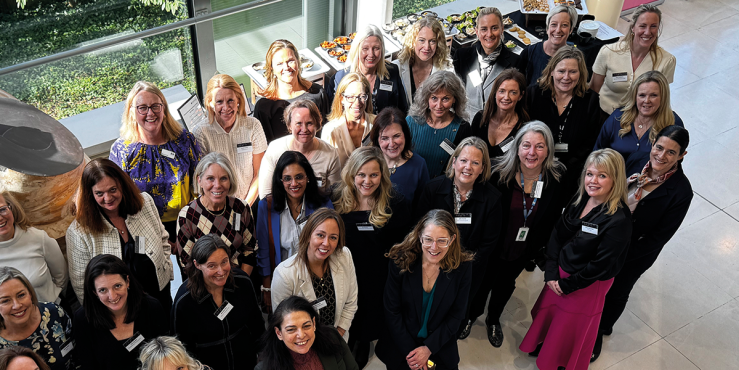
Murray Edwards College
“I want to change the narrative,” Jabado says. “I want to show it’s not all doom and gloom. People invest in people, and you tend to invest in people who look like you. So if you have more women empowered to choose, they’re more likely to invest in other women. I’m not trying to lower the bar, I will widen the gate.”
Hanadi Jabado is founder and Managing Partner of Sana Capital, and founding member of Alma Angels.