
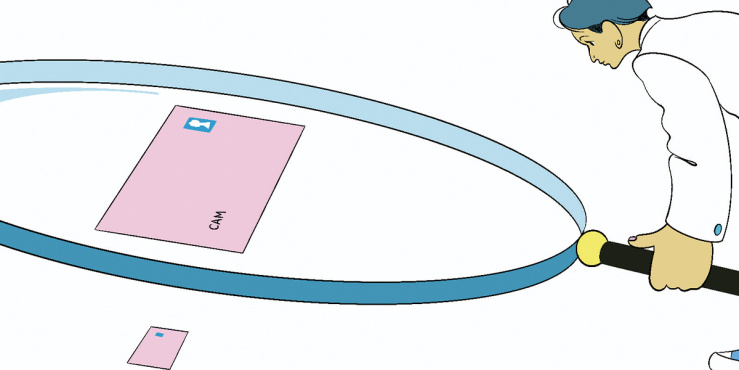
Welcome to the Lent edition of CAM
Welcome to the Lent edition of CAM. One river. Four and a bit miles. And 20 minutes of some of the most intense competition in the world. But while the Boat Races* might be our most famous clash with the Dark Blues, they are by no means the most fierce.
Yes, the rugby lads and lasses are quite intimidating, but for real sporting rivalry? Go see Varsity cheerleading. Or Varsity powerlifting. Or (and this is where the real competition is) Varsity wine tasting.
Because while not every Varsity match attracts the world’s media, every single one revels in tradition, rivalry... and a lot of fun.

So join us on page 20 to cheer on the Light Blues. Everyone knows that it’s tough for new grads this year, and everyone seems to have a reason, from the rise of AI recruiters through to a lack of entry level jobs. But what’s really going on, and how is it impacting Cambridge alumni?
We talk to economists, students and the Careers Service to find out. Elsewhere, we find out how AI is creating its own visual culture, and, Professor Shruti Kapila presents her insights on Indian political thought. On these topics – and on all things Cambridge – we look forward to your contribution to the debate, online at magazine.alumni.cam.ac.uk, by post and email or on social media.
*Just putting it out there: we usually win.
Mira Katbamna
(Caius 1995)
Letters
Cast in stone
Your article about sculptural plaster casts, such as those at the Museum of Classical Archaeology, is correct to highlight the issue of authenticity (Cast-offs, CAM 106). A number of ancient originals have, sadly, suffered from vandalism and theft through the depredations of ‘collectors’ in later centuries, rendering plaster copies an essential source of authentic details. In a cast gallery, the reconstruction of original painted colours can offer a startling experience for those modern viewers conditioned to white marble purity. David Wills (Wolfson 1992)
Aussies rule
Fascinating to read of the long history of Cambridge Australian Rules Football (CAM 106). Wikipedia’s Varsity match results has a lacuna between 1954 and 1983. In November 1971, however, in my first term, I received, out of the blue, an invitation to a training session. Never having played, I attended with six other Australians and played the next week against Oxford. Besides us seven Australians, the Cambridge team comprised various British students plus non students from London’s Australian heartland of Earl’s Court, aka Kangaroo Valley. My diary says I enjoyed the game, almost scored once and made one mark (whatever that means). It is silent on the score and winners, perhaps because I had no idea. For some reason, I received no further invitations. Alastair Bates (Trinity 1971)
On the tip of my tongue
I note Andrew Noble’s observation (CAM 106) that Cambridge is a rare leading European institution in that it does not require knowledge of a foreign language from applicants. The ability to study languages at school is one which is geographically and socially uneven, likely more so than on the continent. Making a second language compulsory for applicants at present might have the insidious effect of making Cambridge less accessible, and narrowing access to the same excellence which more stringent standards would seek to enhance. Dominic Weir (Girton 2015)
I very much agree that young people should learn foreign languages at school, but I’m pretty sure any entry requirement for a compulsory foreign language could be circumvented. The real problem in UK schools today is that students are not taught French or German, or chemistry or physics. They are taught how to pass examinations in French or German, or chemistry or physics – how to jump through hoops, just as I was taught Latin some 60 years ago. Peter Borrows (Peterhouse 1960)
I am surprised by Andrew Noble’s comments, but then I come across modern university graduates who are completely monoglot. Way back when, most universities, including Cambridge, required an O-Level in a modern language, and most colleges expected O-Level Latin as well. I’m a scientist and arrived with two modern languages – French, in which I was proficient, and Russian, less so. Latin, despite its reputation for fatal effect remembered in a little ditty, has proved to be useful too. Languages are fascinating – although Gàidhlig is hard! John Heathcote (Queens’ 1973)
The advent of comprehensive schooling, while a well-intentioned scheme, proved to be a disaster for education in general and languages in particular, with too many pupils failing language exams either through lack of interest or available teachers, or because they found them too difficult. Instead of trying to rectify that sad state of affairs, the Labour government’s decree in 2004 that pupils need no longer study languages ultimately saw Cambridge drop its language matriculation requirement (in 2008) in order to admit talented students who, for one reason or another, had never studied a foreign language at school. Richard Holroyd (St John’s 1968)
Indigenous foundations
Thank you for the interesting anthropological article and photographs (Dream State, CAM 106) concerning the Shuar of the Ecuadorian/Peruvian Amazon region. It made fascinating reading. I maintain that having a degree in the social structure and functioning of Indigenous communities provided me with the best possible foundation, not only for working in the NHS, but also for holding office (as a lay reader) in the Church of England! Michael Foster (Fitzwilliam 1965)
So, farewell then, The Gardenia So sorry to read of the closure of The Gardenia Restaurant (CAM 106). We went there every week for a late meal after running The Musketeers youth club on the far side of town. Chicken livers with rice and chips was a favourite. They knew their customers – I left my distinctive long red scarf there once and they had it ready for me the following week. John Rudofsky (Selwyn 1970)
Write to us
We are always delighted to receive your emails, letters, posts and comments:
- Email – cameditor@alumni.cam.ac.uk
- By post – CAM, University of Cambridge, 1 Quayside, Bridge Street, Cambridge CB5 8AB
- Facebook – facebook.com/cambridgealumni
- LinkedIn – linkedin.com/school/university-of-cambridge
Letters may be edited for length. Please mark your email: ‘For publication’.
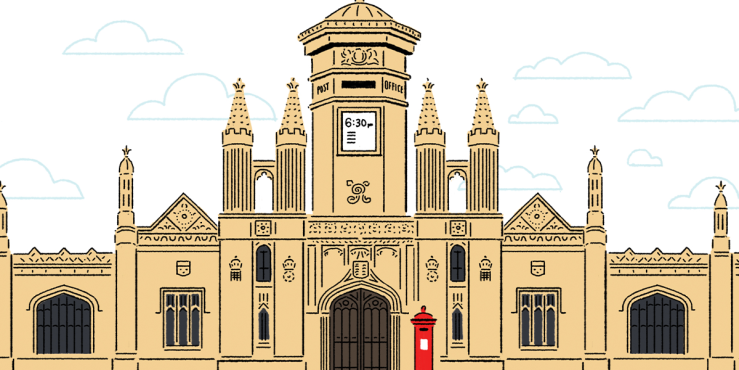
In brief
ARTIFICIAL CARTILAGE
A squishy material that can sense tiny changes within the body has been developed by Professor Oren Scherman’s research group in the Yusuf Hamied Department of Chemistry. During a flare-up, this ‘artificial cartilage’ material triggers the release of anti-inflammatory drug molecules – but only where and when they are needed, potentially reducing side effects.
AI CONSCIOUSNESS
Could AI ever become conscious? We may never know, says Dr Tom McClelland from the Department of History and Philosophy of Science. He argues that a valid test for what constitutes consciousness will remain out of reach for the foreseeable future, a gulf in our knowledge that could be exploited by a tech industry intent on selling “the next level in AI cleverness”.
MEERKAT MONOGAMY
When it comes to sticking with one partner for life, humans are far closer to meerkats and beavers than monkeys, according to a new study. Dr Mark Dyble from the Department of Archaeology used a new computational model approach, lending further weight to the view that monogamy is the dominant mating pattern for humans.
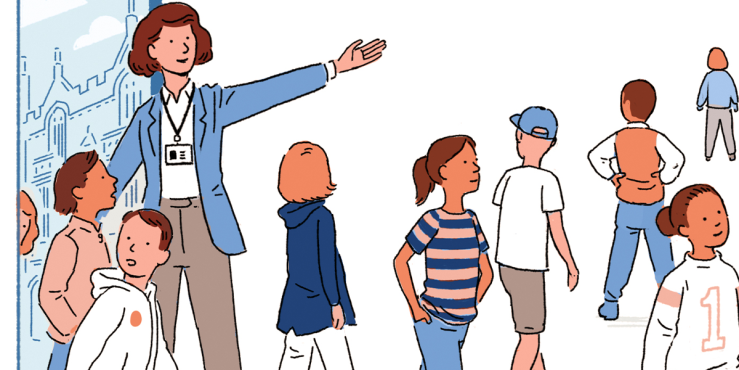
Community
New civic approach to help create a more connected city
Forget Town v Gown. As one of the region’s biggest employers and community partners, Cambridge is deeply embedded in the lives of everyone who lives in the wider city.
Which is why the University has launched its new Civic Framework, following an in-depth listening exercise carried out with 1,700 local people.
This work aims to strengthen its relationship with the city and explore how residents can share more in the region’s growth.
Respondents to the listening exercise believe the University makes the strongest contribution to the cultural life of Cambridge and the local economy, and expressed a strong desire for it to be more visibly and actively engaged in improving the quality of life for local communities.
Under the Civic Framework, the University will be exploring new ways to create welcoming, inclusive and accessible spaces – physical, cultural and intellectual – by opening up more of its estate, venues and resources to support shared learning.
It also aims to help boost skills development across the region, with a focus on young people.
“Our mission is to contribute to society through education and research of the highest international quality, and this mission starts here, in this city,” says Vice-Chancellor Professor Deborah Prentice.
“The impact we seek globally must be grounded locally – in the wellbeing of the people, the vibrancy of the communities, and the sustainability of the environment we share.”