
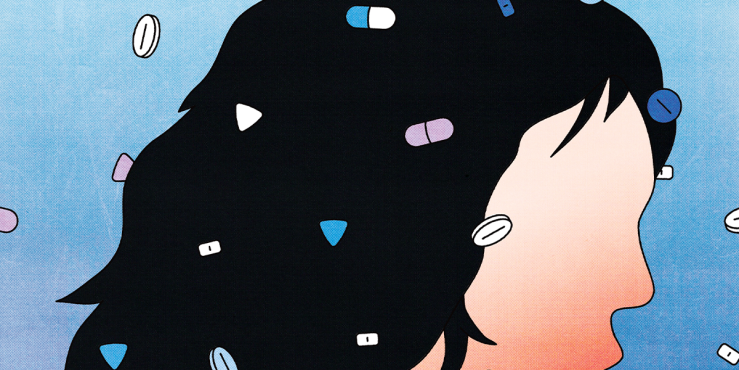
Professor Amanda Sferruzzi-Perri says the underrepresentation of females in scientific research has significant consequences for disease treatment.
The outdated notion that female bodies are ‘too complicated’ for science, due to their hormonal variability, has long influenced biomedical research, leading to an underrepresentation of female subjects and women’s experiences that persists to this day.
The earliest misconception, ironically, was that male and female bodies barely differed, beyond their organs of reproduction.
There was no understanding of possible differences in how women’s bodies work, how they respond to stresses, fight off infections, show disease or pain, or respond to treatments.
As a result, the earliest medical research was largely conducted by men on male subjects or male animals, with the assumption that what they saw would be the same for both sexes.
It wasn’t until the early 1900s that researchers understood that hormones differed between male and female bodies, and that there were hormonal changes in the female body across the ovarian cycle.
Unfortunately, these insights didn’t lead to a shift in scientific practice, because the conclusion drawn was that the female body was… too complex to be a consistent research subject.
Women’s hormonal cycles, it was believed, would introduce challenges and variability in research results. So rather than correcting the existing bias toward male subjects, males continued to be the default – only the reasoning changed.
Male animals and male humans were deemed easier to study – even though we now know many hormonal changes occur in male bodies, too, through the lifecycle

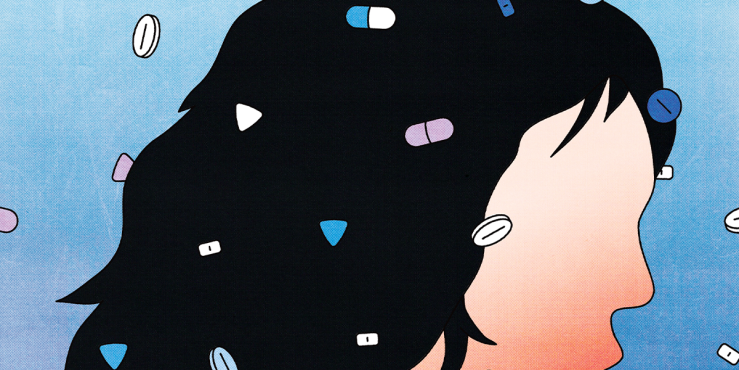
George Wylesol
This approach wasn’t entirely due to ignorance and prejudice.
There have been sincere concerns about studying women’s bodies, particularly in clinical trials, because females are born with every egg they will ever produce.
So there can be fears about research interventions that might compromise a female subject’s fertility, her pregnancy or the health of the next generation that would be born from those eggs.
In part, it’s an attitude of caution or protection. But the consequence is a lack of information about female bodies: what their disease pathways look like, and how management and treatment might differ from those recommended for males.
The shortcomings of such an approach were recognised by 1993, when the US National Institutes of Health issued a mandate that female subjects should be included in clinical trials.
That attitude eventually filtered through to Europe, Australia and the UK, and there has been a push to include females – or, importantly, to include both sexes – in studies, because we know certain conditions vary in prevalence by sex, such as heart problems disproportionately affecting males, and autoimmune and endocrine issues in females.
So there has been a push for change – but it’s still not fast enough.
And we are still living with significant consequences of this idea of the too-difficult female body – even now, medical texts will contain facts solely derived from the study of male subjects, and drugs remain on the market that have never been tested on female bodies.
In fact, there is data suggesting that when drugs are pulled off the market, the reason in around 80 per cent of cases is that they caused adverse side effects in women, having been tested only on male subjects.
There are also instances where the prescribing dosage is based on studies of the male biological body, and is not correct for female patients even after adjustment for body weight. So it’s likely we’re mis-prescribing, or even not prescribing the correct drugs, to help treat and manage problems of the female body.
Information is power, so it’s essential we study both sexes, as there is still much we don’t know.
A major interest of my lab is understanding to what extent sex differences impact on disease susceptibility, particularly in response to adverse environments in very early development.
We know male and female foetuses vary in their development, and that prenatal risks of disease are different.
Is that related to sex chromosomes, or to hormones, or to the placenta – the vital organ that forms during pregnancy to support foetal development?
What sets up a trajectory of divergent outcomes for male and females after birth that might explain adult differences in the incidence of diabetes, certain cardiovascular diseases and autoimmune diseases? The female and male bodies are both amazing.
If we avoid favouring one over the other, or simply assuming there’s no difference, we can design strategies that are more effective – and that have better outcomes – both for individuals and for strained healthcare systems.
Professor Sferruzzi-Perri works in the Department of Physiology, Development and Neuroscience, leading on reproduction, development and lifelong health.